 American Physician Institute for Advanced Professional Studies

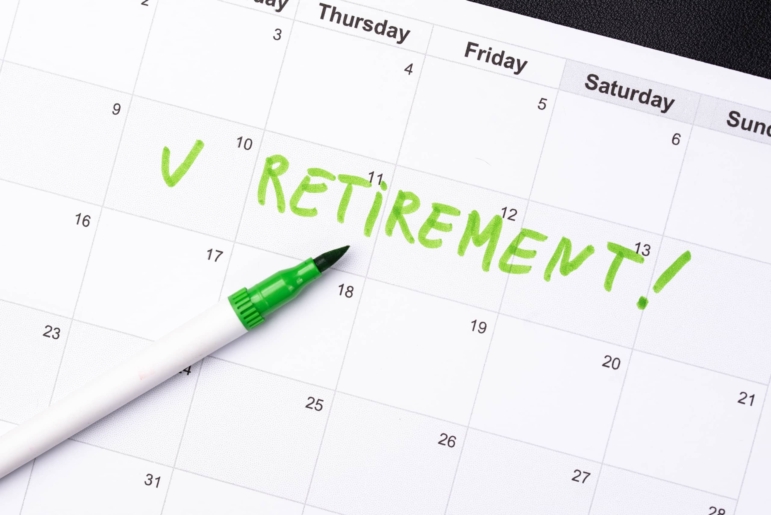
FIRE is an acronym for Financial Independence – Retire Early. Over the years, I’ve had the privilege of speaking with hundreds of physicians and other clinicians specifically about work and career topics. On November 20, 2025, I am presenting a free webinar, the first of two, on FIRE. You can register for it for free here.
Let’s start our considerations here: Think of FIRE as a means to an end. In fact, FIRE comprises two means: financial independence and early retirement. In the acronym FIRE, these are brought together, with the achievement of financial independence early in one’s career as a means to early retirement. But early retirement, rather than being an end in itself, is a means to further ends: as an escape from a stress-inducing job or as a way to spend time otherwise (or as some combination of these two).
Thus, to achieve one’s ends as efficiently and effectively as possible, the work that one does should optimize for compensation and be kept to the shortest duration possible. The bargain struck with oneself is to split one’s adult life in two: to sprint making money in the first half and to relax in freedom in the second half.
Fine: I understand this calculation and accept that it has benefits. At the same time, I have some misgivings about it.
My misgivings relate to the possibly dichotomous ways of thinking about work and retirement. One split is time-related: first, I spend years hauling ass making money, and then I retire early and find something else to do. A second split that can form is seeing the years of work as being nothing more than a means towards an end, and retirement as the end. A third cognitive split that can arise is seeing work as all-bad and retirement as all-good.
These forms of dichotomous thinking need not occur, and they are least likely to occur if they are considered explicitly and guarded against. I’m all for saving and investing money early in life. I understand seeking out well-compensated work. What I wish to avoid is living as if my life were on hold until retirement, living a life of unfreedom until, one holy day, I retire and achieve the freedom I have foregone for years or decades.
Can I not, instead, work hard and both make enough to save/invest and live a good life during my work years? I can.
Can I not, instead, find my work as rewarding and freedom-giving as those far-off imagined retirement years? I think I should be able to.
Can I not, instead, work hard yet work at a job that doesn’t grind me into a state of burnout? I can, if I look for and take such opportunities.
Can I not balance my time between work and family life? Yes, I can, but it may not be in my current job or under my current job conditions, which I negotiated. I may need to renegotiate my work conditions – hours worked or compensation – or seek another job.
My view of FIRE is that it is a good thing, in many ways life-affirming, but that, if taken too far, it can be life-denying.
Free time in one’s 50s and 60s does not compensate for the lack of free time in one’s 30s and 40s. Both are valuable, but they are not fungible. Building one’s life around work for 2-3 decades and then pivoting to one built on something else entirely for the following 2-3 decades may not work well. That pivot that one has worked so hard for may one day begin to appear as a pivot into … the void: into a lack of an organizing activity, a loss of purpose and meaning, a loss of status and achievement, and acknowledgement. It can be a pivot into a rather empty life, one left empty because, outside of work, it was never nurtured.
So, my message: consider FIRE. There is much to benefit from it. But remain flexible. Don’t sacrifice too much of your present for a vaguely imagined future. Maintain all the important aspects of your life through your working life, even during the years of maximum work effort, and into retirement. Maintain your connections to family, friends, and community, to your spiritual growth, to other sources of meaning and purpose. When the time comes for retirement, you will likely find that your ideas about it are vastly different than what they are today.
Further, if you’re getting burnt out, act now: identify what it is that stresses you out most and negotiate those stress-inducing factors out of your life. Burnout leads to more burnout, stress to more stress, depression to more depression, medical errors to more medical errors. Do not count on anyone else to save you. Everyone else is fighting their own battles and probably does not have the bandwidth to see and comfort you in your battles.
We all live within constraints, but freedom must be found within them. To live unfree is unsustainable. It will end one way or another, for better or worse. So, choose for the better. That usually requires hard reflection, hard decisions, and hard confrontations.
Until next time,
Dr. Jack
Language Brief
“Wealth consists not in having great possessions, but in having few wants.” – Epictetus
“The price of anything is the amount of life you exchange for it.” – Henry David Thoreau
“Beware the barrenness of a busy life.” ― Socrates
“Money is a great servant but a bad master.” – Francis Bacon
“It is not the man who has too little, but the man who craves more, that is poor.” – Seneca





Leave A Comment